What is an ip address what is an ip address becomes easier to understand when you connect each term to one job in the network. Internet addressing can look complicated because several layers operate at once, but most everyday questions become manageable when you separate local addressing, routing, name resolution, and security.
This guide explains what is an IP address with practical examples for home users, students, website owners, and people troubleshooting devices. The goal is to help you recognize the important values, avoid common mistakes, and know what to verify before changing a configuration.
What is an IP address in simple terms
An IP address is a numeric identifier used by Internet Protocol so devices and networks can send packets toward the correct destination. It is best understood as routing information: routers and hosts need an address in order to decide where a packet should go next.
Apply this section to one real network you use. Identify the exact setting, address, or record involved and write what job it performs before you consider changing it.
Why devices need IP addresses
Devices on IP networks need addressing so traffic can be delivered to the correct network interface. The address does not describe the human using the device; it is part of the network information used to move data.
Separate observation from assumption here. Record the value you can actually see, then decide what extra test would be needed before blaming that value for a connectivity problem.
How a website uses IP addressing
When you enter a domain name, DNS usually translates that name into one or more IP addresses. The browser then attempts to connect to the returned address, and routers forward packets across networks until they reach the destination.
Keep local and Internet-facing context separate. The same number can be meaningful inside one network while being irrelevant or unreachable from another network.
IP address versus domain name
A domain name is a human-friendly label such as example.com. An IP address is used at the network layer. DNS connects the two, which is why people can browse by names instead of memorizing addresses.
If you are troubleshooting, change only one setting after saving the current value. Networking problems become harder to diagnose when several variables move at the same time.
Local and Internet-facing addresses
A phone or laptop may have a private address inside the home while the router uses a public address toward the Internet. With IPv4, network address translation commonly lets many local devices share one public connection.
Use this concept as a decision point rather than a vocabulary exercise. Ask which screen, command, DNS record, or router page would provide evidence about this part of the path.
Why an IP address may change
Many networks assign addresses dynamically. A home device can receive a new private address from the router, and an ISP can change the public address of the connection. A changed address does not automatically mean the user or device changed.
Remember that convenience and security are different goals. A configuration can make access easier while creating exposure, so verify the security effect separately.
What an IP address can reveal
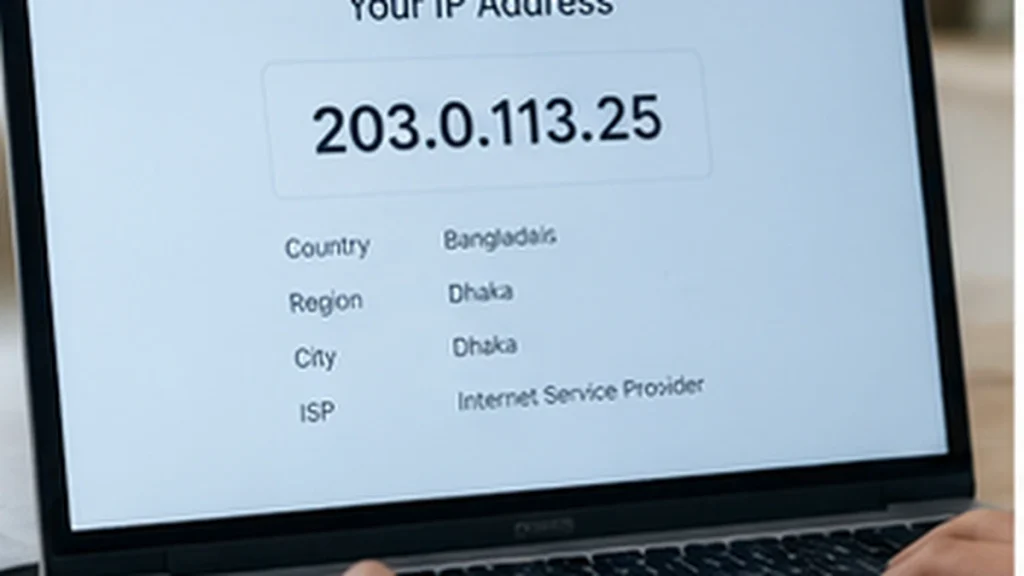
An address can help identify the network or provider and may support rough geolocation, but it is not a precise home-location tool. VPNs, mobile networks, corporate gateways, and shared addresses make simple location assumptions unreliable.
When another device is available, compare it with the affected device. A working control device can quickly show whether the problem is local or network-wide.
Use IP information safely
Treat an IP address as technical network information, not as a password and not as proof of identity. Avoid publishing unnecessary network details and use stronger authentication evidence when identity matters.
Finish by explaining this idea in one sentence without jargon. If the explanation is still unclear, return to the practical example before moving to more advanced settings.
Source and destination addresses in packets
IP packets carry addressing information so network equipment knows where traffic came from and where it should go. Routers use routing tables and policy to forward packets; they do not need to know the human meaning of the content.
Why one device can show several IP addresses
A modern computer can have an IPv4 address, one or more IPv6 addresses, a loopback address, and addresses on virtual adapters such as VPN software. Multiple addresses are normal when the device participates in several network contexts.
A practical networking example
Imagine a device that appears connected but cannot reach the expected service. Instead of changing random settings, the user identifies the local IP information, checks the gateway, tests whether an Internet address is reachable, and then checks DNS. This layered approach shows where what is an IP address fits into the path and keeps one symptom from being mistaken for the whole problem.
Connect this topic to the rest of your IP knowledge
Read IPv4 vs IPv6 for one related concept, and use public and private IP addresses when you need a second piece of the same networking picture.
These links point to other posts in this same first batch. Once all ten posts are published, the site will work as a connected beginner reference rather than as isolated articles.
A seven-day learning plan for what is an IP address
Day 1: identify the relevant values on one real device. Day 2: mark which values are local and which are Internet-facing. Day 3: review the router or DNS configuration without changing it. Day 4: perform one safe lookup or connectivity test. Day 5: compare the result with a second device or network. Day 6: write a short explanation in your own words. Day 7: repeat the check without notes and correct any misunderstanding. In this article, apply that point specifically to what is an IP address and the network you are actually using.
You can compress the plan into one afternoon if you already understand networking, or spread it across several weeks if the concepts are new. Practical repetition matters more than speed.
Quick checklist
- Key purpose of what is an IP address identified
- Local and public context separated
- Current values saved before changes
- DNS and routing roles kept separate
- Security assumptions checked
- One practical test completed
Use the checklist as a learning and troubleshooting aid. The goal is to understand what is an IP address well enough to explain what each value does and to know which part of the network to check next.
Frequently Asked Questions
Do I need advanced networking knowledge to understand what is an IP address?
No. Start with the basic purpose of each value and use one real device or router as the example. Advanced routing and subnet design can come later.
Can I copy IP settings from another device?
Usually no. Devices need values that fit the actual network, and copying a manual address can create conflicts. Use DHCP unless you have a clear reason to configure an address manually.
Does an IP address identify a person?
Not reliably by itself. Addresses can be shared, changed, translated, or routed through VPNs. Identity requires stronger evidence than one network address.
Should I change DNS or IP settings whenever the Internet feels slow?
No. Slow performance can come from Wi-Fi quality, congestion, routing, the remote service, or the ISP. Change network settings only when the symptoms and tests support that decision.
How to review your understanding of what is an IP address
Open the relevant settings, DNS view, or router page and identify the values without changing them. Explain what each value controls, whether it is local or public, and what symptom you would expect if it were wrong. This turns what is an IP address from a definition into a troubleshooting skill.
Then compare your explanation with the technical reference and correct any gap. Keep a short note with the terms you confused most often so the next network problem starts with a clearer mental model.
How routers use network prefixes
Routers do not normally need a separate route for every device on the Internet. They use network prefixes to group address space and forward packets toward the next network that can move the traffic closer to the destination.
Use a real device as the reference for this point. Write the current address, record, or route exactly as it appears, then explain what would change if the value were wrong. This turns the concept into a concrete diagnostic step instead of a definition you only memorize. For what is an IP address, keep the example tied to the actual network or service you are testing.
Why loopback addresses are different
Devices also use special addresses for internal testing and local software communication. Loopback traffic stays on the device, which makes it useful for testing services without involving the external network.
Compare the same setting on a second device or network when possible. A difference does not automatically mean one is wrong, but the comparison can reveal which values are supplied by the local router, provider, VPN, or DNS service. For what is an IP address, keep the example tied to the actual network or service you are testing.
Why address ownership and device ownership are not the same
A public address may belong to an ISP, cloud provider, company, university, mobile carrier, or VPN service. The organization controlling the address block is not necessarily the same as the person using the connection at a particular moment.
Before changing configuration, save the current value and the time of the test. Networking problems can be temporary, so a small record helps separate a persistent configuration issue from a short outage or changing provider condition. For what is an IP address, keep the example tied to the actual network or service you are testing.
How servers use IP addresses differently from home devices
A public server may be configured to accept traffic directly on a public address, while a home device is commonly behind a router. The difference affects inbound connections, firewall rules, and whether port forwarding or a reverse proxy is required.
Try to predict the symptom before running the test. If your prediction is wrong, update your mental model instead of changing more settings. This habit makes network troubleshooting more reliable and reduces trial-and-error changes. For what is an IP address, keep the example tied to the actual network or service you are testing.
A practical way to document IP information
When troubleshooting, record the device address, gateway, DNS servers, public address, adapter name, and time of the test. A small snapshot of the network state is far more useful than remembering only that the Internet was not working.
Finish this step by explaining the result without jargon to someone who does not manage networks. If you can describe what the value controls, where it is valid, and what it cannot prove, you probably understand the concept well enough to use it safely. For what is an IP address, keep the example tied to the actual network or service you are testing.
Authoritative resource to review
For a technical reference related to this topic, review ICANN – Internet Protocol Address. Use your device manufacturer, ISP, hosting provider, or network administrator for configuration details that are specific to your environment.
Final perspective
What is an ip address becomes much less confusing when each value is connected to one job: identifying an interface, deciding what is local, finding the next router, translating a name, or protecting a connection. Learn the role first, then learn the syntax and tools. That order makes troubleshooting faster and reduces the chance of changing the wrong setting.